

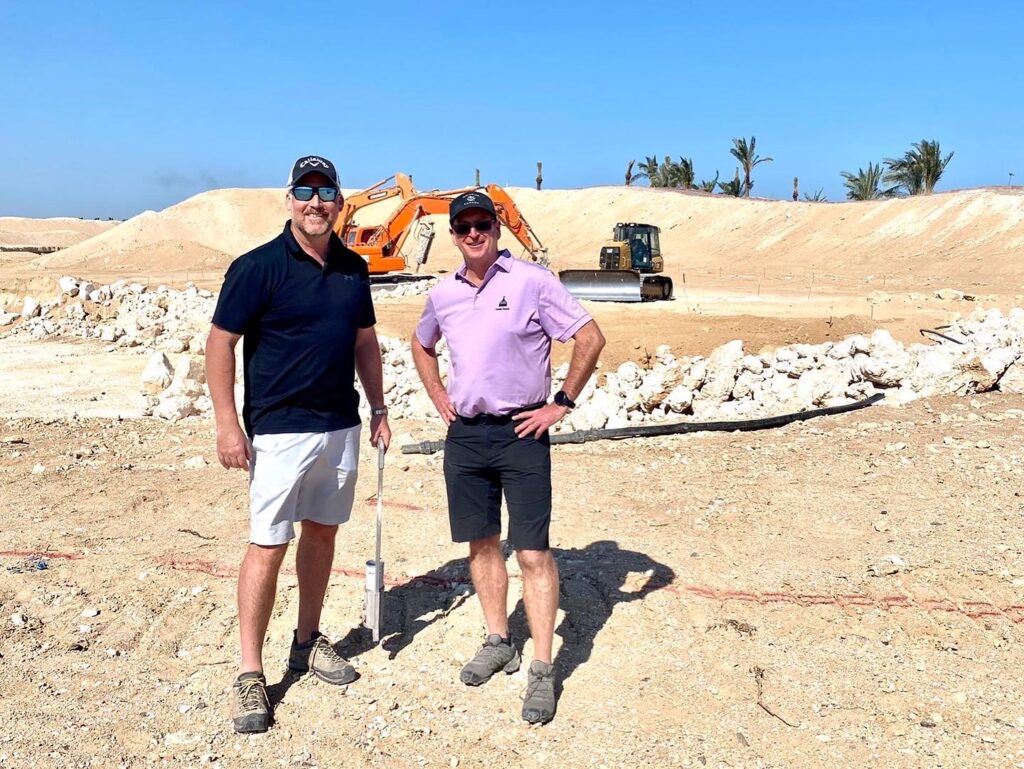
Tim Lobb is the founder of Lobb + Partners, a full-service golf design firm with offices in the UK, North America, Spain and Asia. A Past President of the European Institute of Golf Course Architects, Tim is also a member of the Society of Australian Golf Course Architects.
We sat down to talk greens and specifically how you build great complexes that leave you desperate to play again.
What follows are the insights of a master golf course designer with new build projects in Nigeria, Egypt, the United Kingdom and Asia, and renovation credentials on some of the UK’s most historic layouts including Woking, The Berkshire and St George’s Hill.
Greens are top priority
Creating outstanding greens is the most important factor in golf course design.
It’s what golfers talk about most in the clubhouse and golf courses’ reputations can be made or broken on the quality of their greens.
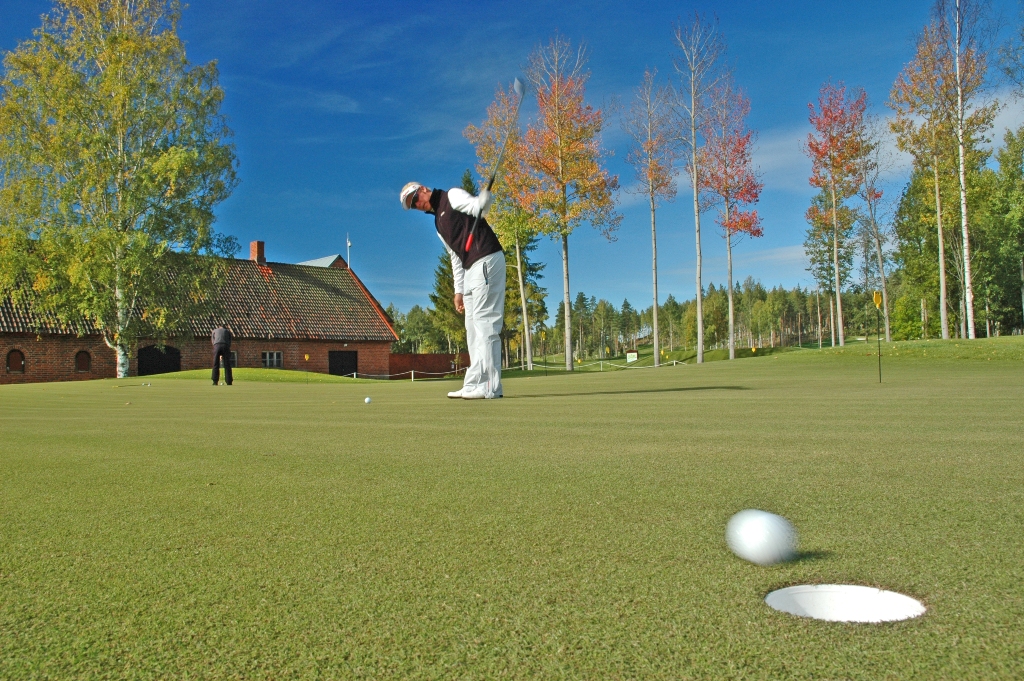
Greens are also where the business end of professional tournament golf takes place, where championships are decided, so they are regularly the focus for the television cameras and the viewing public.
From a practical perspective, ensuring that the greens are constructed to the highest quality is vitally important – but greens have to be designed to be both memorable while also blending into their surroundings.
It’s a tough job for the designer, especially as 18 greens have to be created, each individual yet consistent with the others. However, you can always tell what sets a great green and a great course apart:
1. The right green for the right location
Greens must blend in with their natural surroundings – the contours of the land, the conditions of the site and the aesthetics.
A designer can’t go to every new site with the same formulated design for a green – forcing a green into a location can make it stick out like a sore thumb, even if the putting surface itself is excellent.
Some of the best greens in the world have developed completely naturally.
So the designer should always use the natural contours of the land around the green to their advantage.
A good example of this is are the greens at Linna Golf near Helsinki, a TPL design and Finland’s #1 course – the site was more or less made for me and I simply blended the natural slopes of the land around into the green.
The amount of work that went into creating the greens was low and, to my eye, it fits seamlessly into its surroundings.
2. Suitable challenge for the approach shot
Greens aren’t just for putting on, of course.
They also receive incoming shots, and taking this and the likely length of the approach shot into account is an important consideration.
Par-5’s are an interesting case in point.
I consider them three-shot holes, even though many professionals can often reach them in two.
So I have no problem making the green smaller or harder to hit – that’s fair for a third shot with a short iron, while increasing the challenge for the long, accurate hitter who wants to try and reach in two.
However, if it is a long par-4, say around 460 yards, it would be unfair to make the green small with a lot of slope since it would not fairly reward those with length and accuracy to reach in two.
I went to Augusta National to watch the Masters for the first time in 2007 and one of the things that surprised me was just how small the par-5 13th green is when you get up close.
It looks huge on television, but the players have to hit a long iron over Rae’s Creek and land it on a relatively small, steeply sloping green.
It’s a significant test of strength and accuracy and makes even better viewing in real life than it does on television.
3. Variety of hole positions for all green speeds
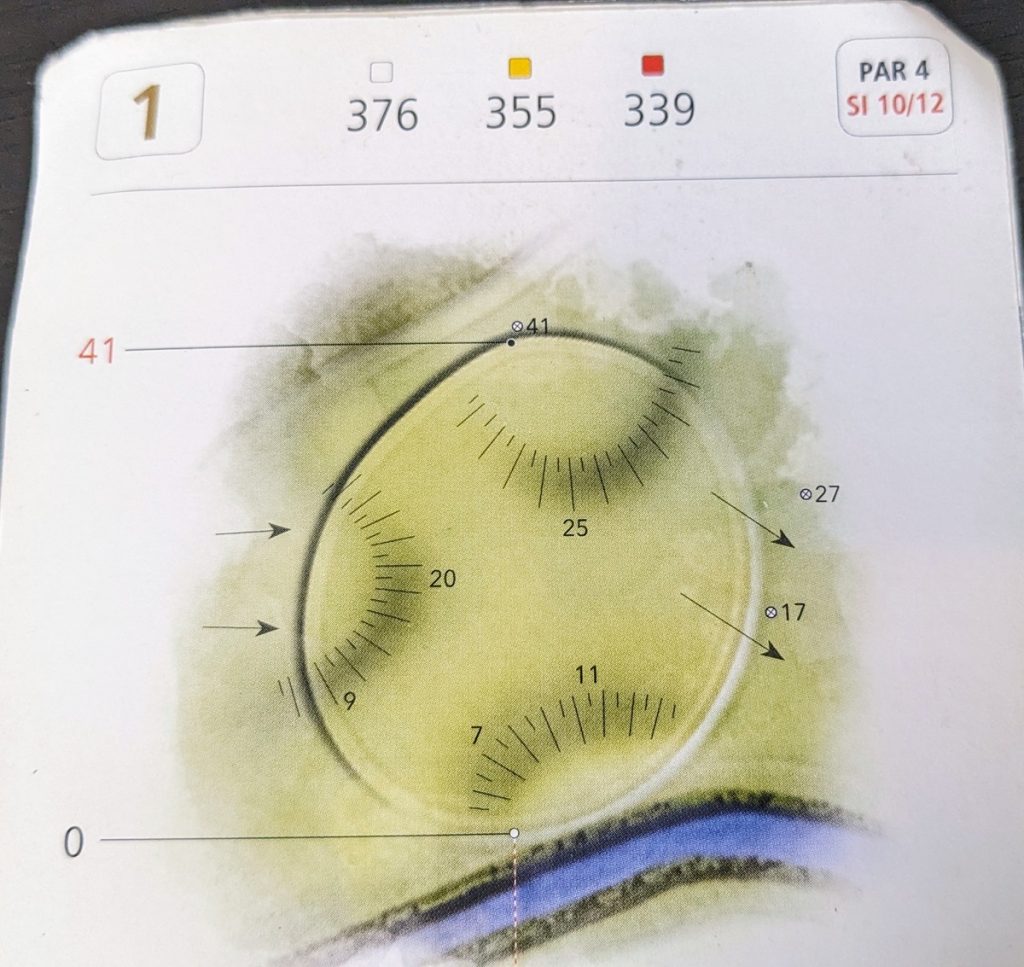
Modern green cutting equipment and grass varieties has seen the speed of greens increase significantly, which means great care is required by the designer in deciding where holes are to be positioned.
The most common problem is when less experienced architects try to do too much with a green resulting in excess slopes.
When I design a green I am always looking to create six to eight ‘pinnable’ areas.
What do I mean by a ‘pinnable’ area?
Essentially, an area of the green with a radius of approximately three metres around the hole, with no more than 3% of slope.
I prefer 1-2% slopes in these areas with steeper slopes, knobs, swales and hollows in other regions of the greens to maintain interest.
An extreme example of the dangers of having too much slope and too fast a green was the 2004 US Open at Shinnecock Hills.
These are old greens that were designed for slower speeds – so when they were cut short for the tournament and then they dried out, the number of pinnable areas was reduced.
In fact, they became treacherously difficult and had to be watered during play, which proved controversial.
4. Sound technical design and quality construction
It’s no good having a great green if water does not drain away or it is sited in the shade of trees – it has to be a working, functional green that can be effectively maintained by the green staff.
You’d be surprised, but there are still golf courses being built that suffer with water build-up on the putting surface.
Personally, I am always looking to create three or four draining swales to allow efficient run-off and drainage from the green surface.
The site of the green is always essential – you don’t want to put a green in the shade where grass growth cannot be optimised.
Of course, the green also has to be constructed correctly and I always use the USGA (United State Golf Association) method, which is a tried and tested technique combining drainage pipes covered with 10cm of pea-sized gravel, topped with 30cm of sand into which the grass seed is directly planted.
Using this method doesn’t mean your green will look like an American-style course – that is down to the design of the green – but this is a proven construction method that creates high quality greens that can be well maintained.
5. Variety of green surface contours and surrounding hazards
I’ll let you into a secret.
Designing 18 different greens for a new course, especially on a flat site where you are manufacturing the golf course, can be a major challenge, testing the designer’s imagination and creativity.
You have to avoid monotony at all costs and ensure you keep the player interested with a variety of challenges.
The key is to let nature play a guiding role in your inspiration.
I am always looking for peripheral features, such as ridges, which I can incorporate into the green’s design.
A great inspiration for me is the Valley of Sin in front of the 18th green on the Old Course at St Andrews.

It’s a fantastic feature and, whichever way you look at this green – from down the fairway playing an approach shot, or trying to putt up its steep slope – it’s the defining characteristic of the green and the hole.
You have to take it into account, even on the tee shot, which is why some professionals will hit their tee shots to the left of the green to play their approach shot from the side of the Valley of Sin.
That’s one green you will never forget playing.
For more about Lobb + Partners, visit: https://lobbandpartners.com/